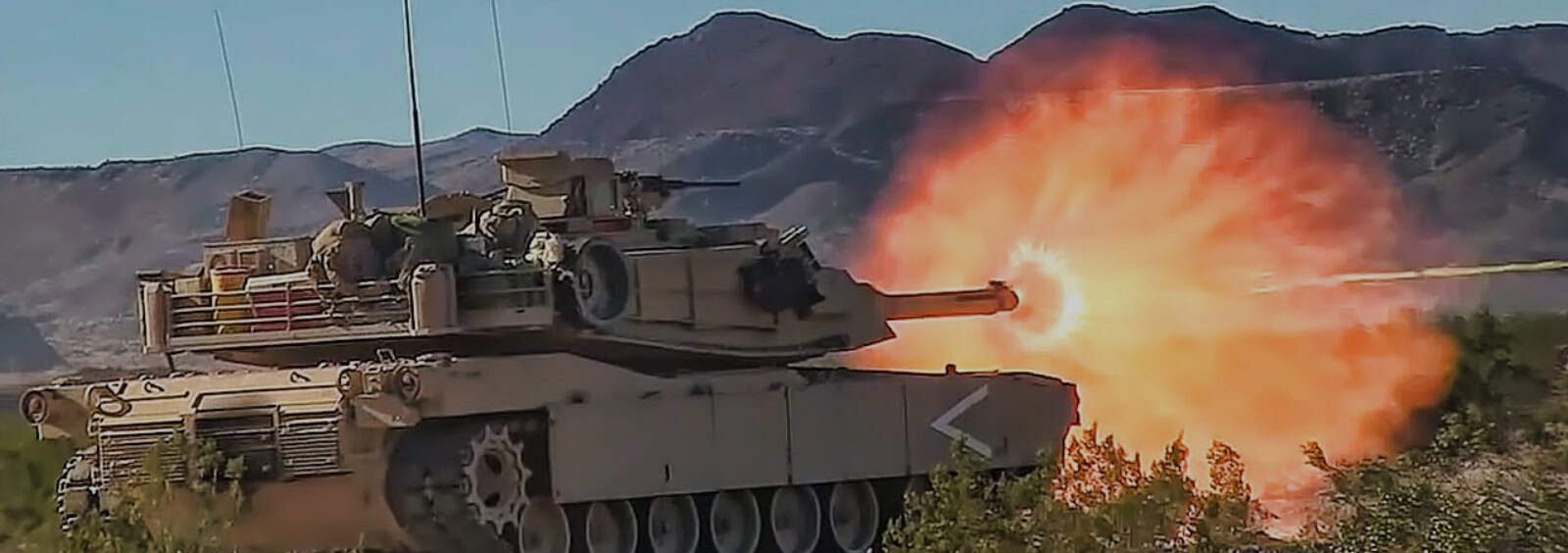
2/26 Diploma of Military Technology (Vehicles & Mobility)

Equip your team with the advanced knowledge and skills used in military vehicle design

  • Develop better designs and more cost-effective technical solutions
  • Reduce design errors and costly product rework
  • Trusted by government & defense organizations
Request quote

Delivery modes:

Onsite

Live-Online

Hybrid

180

Hours Learning Time

4.7/5

Student Satisfaction

Course Overview

Master The Engineering Science of Military Vehicle Technology

This very popular course provides an in-depth and absorbing study into military vehicle technology and provides must-know knowledge about combat vehicle, logistic vehicle and amphibious vehicle design. Key learning areas include design principles, automotive performance, military engines, military transmissions, vehicle dynamics, tracked vehicle steering, and terramechanics and vehicle mobility.

This excellent course is the only online Diploma in the world today and is delivered through Eggler Institute of Technology (USA). It provides students with a unique opportunity and pathway to new knowledge, skills and employment opportunities. Attendees receive a comprehensive set of training notes with supplementary readings materials and technical data.

Students must complete all mandatory readings, course assessments and exams within a 15 week period. Upon successful completion of all studies, students are awarded a Diploma in Military Technology (Vehicles & Mobility). At the completion of the course, students who have meet the course requirements will be issued a Diploma certificate. This course is offered on a non-accredited basis.

Mr Mark Eggler

Military Vehicle Technology & Systems Engineering

Mark is a senior professional engineer and project manager with over 25 years experience working on large complex projects. He has worked for the Australian Department of Defence and leading private sector organizations on major acquisition programs.

Delivery modes for this course

Onsite

Our on-demand courses offer the ultimate flexibility through an online platform, enabling professionals to complete the training at their own pace and convenience. With the ability to rewind and revisit course materials, participants can ensure maximum knowledge absorption and retention.

Live-Online

Our on-demand courses offer the ultimate flexibility through an online platform, enabling professionals to complete the training at their own pace and convenience. With the ability to rewind and revisit course materials, participants can ensure maximum knowledge absorption and retention.

TruHybrid

Our on-demand courses offer the ultimate flexibility through an online platform, enabling professionals to complete the training at their own pace and convenience. With the ability to rewind and revisit course materials, participants can ensure maximum knowledge absorption and retention.

Who Should Take This Course?

Project Design engineers
Mechanical Engineers
Mobility Engineers
Systems Engineers
Military Officers

Course Curriculum

Historical overview | Early developments | Key pre-cursor technology | First fighting vehicles | Post WW I fighting vehicles | WW II fighting vehicles | Modern era fighting vehicles | Quiz | Introdution to land vehicles | The operational environment | Definitions | Design requirements and constraints | Key components | Vehicle geometry | Axle configurations | Quiz | Obstacles | Coordinate reference system | Weight balance | Automotive performance | Vehicle dynamics | Vehicle mobility | Modern military vehicles | Quiz

Introduction | The operational environment | Cardinal design requirements | Design spiral | Design balance | Critical dimensions | Weight and volume considerations | Configurations | Survivability | Availability | NBC Systems | Quiz | Design problems and trade-offs | Powerpack and sprocket position | Turret and gun configurations | Conventional turret | Fixed gun | Oscillating turret | Cleft turret | External gun | Survivability | Ammunition positioning | Autoloaders | Quiz | Vehicle NBC Systems | Requirements | COLPRO | Conventional NBC systems | Cyclonic filters | Particulate filters | HEPA filters | Toxic free area | Environment regulation | Pressure relief values | Maximizing availability | Reliability | Maintainability | Logistic downtime | Videos | Quiz

Introduction | Historical overview | Common design requirements | Cab designs | Chassis and sub-frames designs | Load sharing suspensions | Towing issues & couplings | D-Values | V-Values | Trailer interface issues | Tray designs| Quiz | Tractor designs | 5th wheels | Typical layout | ILHS designs | Loading mechanisms | DIN locks | Loading frame | Lifting frames | Flatracks | Critical dimensions | Recovery vehicles | Lifting arm | Load vs speed matrix | Rear lifting arrangements | Specialist issues | Quiz

Introduction | Key concepts | Shallow fording | Deep fording | Snorkel fording | Design issues | Swimming | Component protection and sealing | Flooded engine | Dry engine | Swimming | Propulsion systems | Flotation aids | Amphibious tanks and IFV | Quiz | Buoyancy and stability | Types of stability | Transverse stability | Centre of pressure | Heeling and righting moment | Meta-centre | Longitudinal stability |Design trade-offs | Free surface effects | Design issues | Roll frequency effects | Quiz

Introduction | Key requirements | Internal comustion engines | Military requirements | Key performance parameters | Power density | Parasitic power losses | Engine configurations | Fuel consumption | Partial load issues | Spark ignition (SI) engines | SI engine charateristics | Key military performance issues | Petrol fuel issues | Military diesel (CI) engines | CI engine charateristics | Key military performance issues | Diesel fuel issues | Fuel maps | Improving efficiency | Quiz | EGR and SGR pollution reduction systems | Key military problems | Boosting performance | Turbochargers | Superchargers | Ground gas turbines | CI vs GT engines | Key military problems |Future developments | Quiz | Assignment 1

Introduction | Key requirements | Engine-transmission matching | Speed matching | Drivelive components | Axle/drive configurations | Gear matching | Gear selection | Final drive ratio | Dry clutches | Power take-up components | Torque Converters | Torque multiplication | Efficiency issues | Tractive effort effects | Quiz | Transmission types | Layshaft gearboxes | Key issues | Dual clutch transmissions | Key issues | Automatic/epicyclic transmissions | Features | Key issues | Semi-automatic transmissions | Key issues | Continuously variable transmissions | Key issues | Final drives and differentials | Key features | Propshafts | Universal joints | Future developments | Quiz | Military hybrid electric drives (HED) | Historical overview | Early HED vehicles | Driving forces for change | HED series layout | Tracked vehicle applications | Key limitations | HED Parallel and hybrid layouts | Key design issues | Key limitations and batteries | Military benefits and limitations | Future trends | Quiz

Introduction | Key functional requirements | Road wheels | Key compents | Design issues | Single pin track | Key compents | Design issues | Double pin track | Key compents | Design issues | Rubber band tracks | Design issues | Track life | Video | Quiz | Skid steering | Skid steering vehicle types | Types of skid turns | Mechanics of skid steering | Friction & moment analysis | Longitudinal forces | Resisting moments |Equilibrium analysis | Geomertic ratio | Practical limitations of skid steering | Case study | Quiz | Operating conditions | Gradient | Soft soil | Accelerating/braking | Limits of performance| Kinematics of skid steering | Slip and non-slip conditions | Sprocket speeds | Calcuating turn radii | Slip factor | Power requirements | Theory vs practice | Skid steering transmissions designs | Clucth-and-brake | Epicyclic clucth-and-brake | Geared systems | Braked and controlled differentials | Double and triple differentials | Quiz

Introduction | Automotive Performance | Rolling Resistances | Aerodynamic Resistances | Gradient Resistance | Road Load |Power requirements | Constant power concept | Calculating road load | Road load curves | Quiz | Tractive effort | Weight effects analysis | Constant power concept | Constant power vs real engine power | Gear requirements | Overall gear ratio (OGR) | Calcuating tractive effort | Calcuating road power | Calcuating drawbar pull | Other useful equations | Calcuating maximum gradient | Calcuating maximum road speed | Using tractive effort and road load curves | Design trade-offs for military vehicles | Quiz | Assignment 2

Introduction | Rims & tire construction | Tire manufacturing | Radial tires | Bias ply tires | Tread patterns | Runflat tires & split rims | New tire developments | Central Tire Inflation Systems | Quiz | Tire Characteristrics | Tyre behaviour | Slip angles | Cornering force & stiffness | Camber force & stiffness | Self-aligning torque | Rolling resistance | Behaviour of runflat tires | Tire effects on vehicle handling | Quiz

Introduction | Wheeled vehicle steering systems | Ackermann steer | Steering geometry and caster | Camber & king-pin axis inclination | Key concepts in vehicle handling | Bicycle handling and neutral steer | Gradient and wind effects | Oversteer | Understeer | Neutral Steer| Quiz | Correction steer angle | Static margin | Case studies | Handling in a corner | Kinematics of cornering vehicles | Directional stability and critical speed | Factors affecting vehicle handling | Quiz

Introduction | Key concepts | Suspensions requirements | Springs & dampers | Tracked vehicle suspensions | Wheeled vehicle suspensions |Future developments | Quiz | Ride & vibration introduction | Road roughness and power spectral density | Types of vehicle vibration | Vehicle dynamic response | Undamped natural frequency | Damped vibration and shock absobers | Quiz | Tracked vehicle ride | Sprung & unsprung mass effects | Resonance | Quarter car model and ride rate | Vibration analysis and isolation | Pitch & bounce | Human response to vibration | ISO standards and 6W Absorbed Average Power (AAP) | Calcualting vibration dose value (VDV) | Quiz

Introduction | Vehicle Mobility | Mobility categories | Soil properties | Traction & drawbar pull | Ground pressure relationships | Nominal ground pressure (NGP) | Mean maximum pressure (MMP) | Vehicle Cone Index | NATO Refenrence Mobility Model (NRMM) |Tyes vs tracks | Quiz | Introduction to terramechanics | Soil properties | Soil Strength | Calculating traction forces and slip | Micklethwaite's equation | Factors affecting drawbar pull | Quiz | Calculating soil resistance forces | Parametric methods | Calculating NGP | Calculating MMP | Limitations of NGP & MMP | Quiz | Cone index | Remoulding index | Rated Cone Index | Vehicle cone index (VCI) and calcuations | Vehicle limitig cone index (VLCI)| Mobility numerics | Quiz | Assignment 3

Hands-On Learning Methods

Experience EIT’s expert-led on site training, offering unparalleled hands-on learning experiences tailored to organization’s specific needs.

A group of people sitting in front of a computer.

Hands-on Training Methods

Our unique approach provides participants with instructor-directed learning material, simulating the experience of a live workshop. This immersive learning experience enables participants to directly apply the technical education and training they receive, reinforcing understanding and equipping them with the skills necessary to excel in real-world applications.
A person's hand holding a blue brain with a network of connections.

Neuro-Scientific Based Learning

Upon signing up, students receive their personalized version of the course materials, granting them unlimited access for life. This invaluable resource allows learners to continuously reinforce their understanding, refine their skills, and stay ahead in their respective fields, making EIT's courses a long-term investment in their professional growth.
View Delivery ModesRequest quote

About EIT

Equipping High Performing Teams For A Dynamic World

In today’s fast-paced world, situations are constantly evolving, and having access to complete information is often impossible. This is where conventional education methods fall short. EIT’s innovative educational approach sets it apart from traditional education methods by focusing on preparing high performers and world leaders to rapidly advance their skills and excel under pressure.

Our unique approach emphasizes hands-on experience and lateral thinking to equip participants with the ability to apply their knowledge and skills effectively when it matters most. By adopting this innovative and tailored approach, EIT stands out as a leader in providing exceptional, practical, and industry-relevant training for tomorrow’s high achievers.


A woman sitting at a desk in a business office.

Satisfied clients from all over the world

Read through countless happy reviews from our participants and organizations.

Testimonial-12

“Thank you for the opportunity, it was an excellent course which will improve my skills dramatically. Portions of the course were easy to grasp through the lecture-based content and during other sections I was lost until I saw the video portion or worked it out on during the hands-on practical application.

On-demand Excel for Practitioners Course

Student, USMC

Testimonial-11

“EIT’s Additive Manufacturing in Practice course offers invaluable insights into AM within the Defense industry. The instructor lectures and hands-on activities were all excellent. A highlight was the on-site 3D printer workshops. I highly recommend this course to engineers in the Defense sector.”

Additive Manufacturing in Practice

Rob Rowan, Senior Test Engineer, USMC

Testimonial-10

“Overall, I think it’s an excellent course and the best one I’ve taken in my 27 year professional career.”

Military Vehicles and Mobility Course

Student, GS Engineering (USA)

Testimonial-9

“Overall this is an excellent class. I have been involved in tracked platform design work for the last 25 years (plus some wheeled platforms). But this class provided me a comprehensive integrated and organized knowledge base for learning.”


Military Vehicle Technology & Mobility

Joe Chou, Senior Engineer, USMC

Testimonial-8

“Excellent course with a great variety of practice based workshop to put theory and HSI techniques into practice. The instructor had an amazing depth of knowledge and experience.”


Systems Engineering in Practice

Student, ST Engineering

Testimonial-7

“The explanations of the FMECA process were detailed and very relevant to my work. I particularly enjoyed the workshop that allowed me to put the method into practice. Great course Eggler Institute.”


Failure Modes Effects & Crtiticality Analysis

Student, NIMR Automotive

Frequently Asked Questions

The top 5 questions asked about EIT Eductation.

Absolutely! Finding the right time to do training is often the hardest part. We love working with our clients to determine the best training window that works for you. We offer customized dates for on-site and live-online courses, as well as self-paced on-demand courses. Get in touch with one of our friendly team and let’s find the right option for you!
Yes! At the EIT, we are incredibly passionate about ensuring that any course we deliver for you will provide maximum return on investment. What does this look like? It means your staff leave us knowing more than before they arrived and, importantly, are ready to put it into action upon return to work! Engage with one of our friendly team members and we can match your learning needs to our education and training solutions!
This is one of our specialties! We understand that what makes your organization successful is unique to you, so why would your training requirements be any different? During an initial consultation, one of our training experts will work with you to tailor your learning experience to maximize your training outcomes. Click this link below and one of our amazing staff will arrange a consultation to tailor the ideal package based on your unique needs!
You can easily find our publicly offered courses’ calendar by clicking this link here! If you can’t see a date or a course that works for you, get in touch with one of our friendly team members by clicking here!
EIT is completely focused on ensuring that our education and training solutions provide real-world outcomes and benefits, something our past clients attest to everyday! You can check out what they have said about our world-leading education and training courses here! Want to learn more? Get in touch with one of our friendly team members today!

The range of courses EIT has available is directly applicable to the acquisition work we perform and EIT can teach from both the acquisition perspective, as well as the detailed core subject matter, both of which are critical for our work. We hosted more than ten EIT courses since 2018, via in-person, live/online, and online/on-demand delivery means. All of the feedback from students has been positive and the material deemed useful to the students in their respective duties. In addition, EIT is welcoming to suggestions for new course topics, as well as tailoring of the course material to the needs of the client.

United States Marine Corps

Materiel Support Command
 
logo of department of the navy USA marine corps

Other courses you may be interested in

Diploma

Diploma

2026-09-07
180 hrs
WorldwideWorldwide

USD $2,995

4/26 Diploma of Military Technology (Vehicles & Mobility)

A tank with flames coming out of it.

Diploma

Diploma

2026-07-06
180 hrs
WorldwideWorldwide

USD $2,995

3/26 Diploma of Military Technology (Vehicles & Mobility)

A tank with flames coming out of it.

Diploma

Diploma

2026-01-12
180 hrs
WorldwideWorldwide

USD $2,995

1/26 Diploma of Military Technology (Vehicles & Mobility)

A tank with flames coming out of it.

Subscribe Now!

Stay Up-to-Date with Our Latest Courses and Special Offers

Stay in the loop with critical course updates and opportunities by completing our form. Never miss out!

Footer Subscription Form